

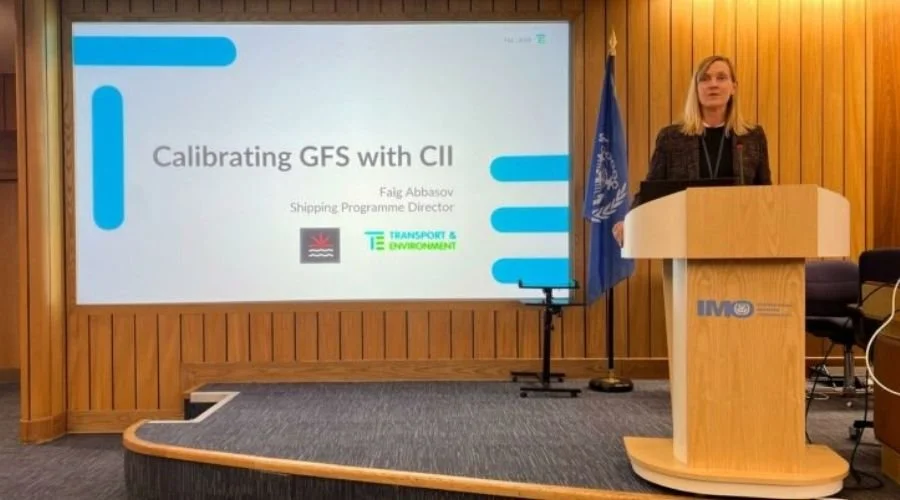
“The Maritime Sector Is Undergoing a Global Transformation Towards a Net-Zero Target”
Yazar: Eda GEDİKOĞLU
21 Eki 2025
The maritime sector, which serves as the principal carrier of global trade, is at the heart of the transformation in the fight against climate change. In pursuit of decarbonisation targets, the sector is being reshaped around energy efficiency, alternative fuel technologies and international regulations. In this transformation process, the Clean Shipping Coalition (CSC) plays an active role in the development and implementation of sustainable shipping policies, positioning itself as one of the pioneers of the green transformation in shipping. We spoke with CSC President 'Delaine McCullough' and 'Transport & Environment’s Marine Transport Policy Coordinator Felix Klann' about the CSC’s global work, the framework of the International Maritime Organization (IMO) net-zero agenda, energy-efficiency strategies and the vision for alternative fuels.
The maritime sector, which serves as the principal carrier of global trade, is at the heart of the transformation in the fight against climate change. In pursuit of decarbonisation targets, the sector is being reshaped around energy efficiency, alternative fuel technologies and international regulations. In this transformation process, the Clean Shipping Coalition (CSC) plays an active role in the development and implementation of sustainable shipping policies, positioning itself as one of the pioneers of the green transformation in shipping. We spoke with CSC President 'Delaine McCullough' and 'Transport & Environment’s Marine Transport Policy Coordinator Felix Klann' about the CSC’s global work, the framework of the International Maritime Organization (IMO) net-zero agenda, energy-efficiency strategies and the vision for alternative fuels.
Maritime transport accounts for approximately 90 % of world trade and in such a scale the environmental impacts of the sector play a decisive role globally. Reducing carbon emissions and transitioning to clean fuel technologies are not only of environmental importance but also of great commercial significance in terms of competitive advantage.
How do you define the concept of “clean shipping”? Why has it become so critical for the global shipping industry today?
Globally, maritime shipping produces about 3 % of the world’s greenhouse-gas (GHG) emissions, which is equivalent to the emissions of mid-sized industrialised nations such as Germany or Japan. As other sectors reduce their emissions while global trade continues to grow, shipping’s share is expected to increase. However, this trajectory can be changed. The sector can reduce its dependence on fossil fuels in the long-term by increasing energy efficiency, reducing vessel speeds, utilising wind-power or electrification solutions, and ultimately transitioning to fully zero-emission energy sources.
“We support policies that are scientifically aligned with the 1.5 °C global-warming limit, protecting and restoring our oceans and atmosphere.”
The Clean Shipping Coalition (CSC) is one of the most effective NGOs supporting the transformation of the shipping sector in line with IMO’s climate objectives. Could you briefly summarise the vision, mission and core strategies of the Clean Shipping Coalition?
The Clean Shipping Coalition (CSC) is an international alliance of civil-society environmental protection organisations and the only body entirely dedicated to maritime shipping. We contribute to the development and implementation of global environmental and climate legislation for shipping, particularly via the IMO. We support policies that are aligned with the scientifically-determined 1.5 °C threshold for global warming, aiming to protect and restore our oceans and atmosphere. We also advocate for safe vessel operations, social and economic justice.
This approach requires that the future of maritime transport operate safely within the planetary boundaries, protect the life-support systems of our planet, and prevent large-scale, abrupt or irreversible environmental change. We develop systemic solutions that address climate, biodiversity and ocean crises in a holistic manner.
The Clean Shipping Coalition obtained observer status at the IMO in June 2010 and has been actively participating in meetings ever since. Some of our members contributed from the beginning to the preparation of IMO’s GHG strategy and have played an active role in the negotiations leading to the Net-Zero Framework. Our member organisations include experts in ocean protection, maritime transport, clean mobility, international trade, energy policy and the governance of regulatory institutions like the IMO. Together, we bring decades of experience in shipping and environmental policy.
“For the 2050 decarbonisation target in shipping, more ambitious and concrete steps are needed.”
The IMO’s 2030, 2040 and 2050 targets provide a roadmap for guiding the sector toward a low-carbon future. Are these targets sufficient for the transformation of the shipping sector? As the Clean Shipping Coalition, what work do you carry out for a low-carbon shipping industry?
Although the IMO’s GHG strategy ultimately aligns with a full decarbonisation vision by 2050, the measures to achieve these goals do not yet reflect the same level of ambition. Member States only recently failed to agree on a fuel standard (the key element of the Net-Zero Framework) consistent with the targets they themselves set. Nevertheless, this policy shows that progress, although slow, is possible and presents an important starting point upon which to build.
It is crucial for governments to recognise the potential of an ambitious IMO policy and to strengthen the progress achieved. In this respect, CSC, together with other NGOs and progressive stakeholders, will highlight the shortcomings of the current strategy and propose concrete solutions and improvements. Within this framework, measures promoting the adoption of clean energy sources, as well as re-elevating the often overlooked discussion of energy efficiency, are included.
“e-Fuels such as e-ammonia and e-methanol derived from green hydrogen are the most promising options.”
In the maritime sector, a range of alternative fuels — LNG, methanol, ammonia, hydrogen and bio-fuels — are on the agenda to reduce carbon emissions. However, these fuels differ in technological maturity, cost and infrastructure requirements. Which alternative fuels can contribute to the clean shipping vision in the medium and long term?
In our view, in the long-term only fuels that can fully eliminate GHG emissions and can be produced at the scale necessary to meet the energy demand of shipping should be considered. From this perspective, e-fuels derived from green hydrogen — particularly e-ammonia and e-methanol — emerge as the most promising options.
Although production of these fuels is currently highly costly, a growing number of pilot projects and flagship initiatives demonstrate that these technologies are reaching maturity. The maritime sector is moving toward a multi-fuel future at least in the medium term.
However, although widely ordered, LNG-fuelled vessels and increasing use of bio-fuels — each carry sustainability risks for different reasons: LNG is still a fossil fuel with significant CO₂ intensity and also poses a major climate threat due to methane slip from engines and infrastructure. On the other hand, the scalability of bio-fuels is limited by the availability of genuinely sustainable feedstocks: crop-based bio-fuels require large agricultural areas, potentially causing food production to expand into new regions and leading to deforestation and large indirect emissions, given that forests are carbon sinks.
Continuing down this path offers no real perspective for long-term alignment, but instead risks binding investments in vessels and infrastructures that will remain inconsistent with IMO’s targets for decades. Instead, IMO Member States and other regulatory bodies should send clearer signals to investors, companies and ship-owners about the need for longer-term strategies. These signals should focus on green e-fuels, wind-power and energy efficiency, and fill the gaps in the existing framework.
“Improving energy efficiency via reducing fuel consumption in new and existing ships plays a critical role in cost-effective transformation.”
Beyond fuel technologies, solutions that improve energy efficiency are also an important part of sustainable shipping. New generation hull coatings, propeller designs and resistance-reduction solutions play a critical role here. To what extent can ship-design and operational optimisation focused on energy efficiency contribute to clean shipping goals?
Reducing fuel consumption of new and existing ships and increasing efficiency is critically important for cost-effective transformation. In this process, ship design and retrofit works play a decisive role especially for new builds.
But perhaps the more effective factor is the change in how ships are operated. For example, slow-steaming can significantly reduce energy demand, yet is not widely applied in the sector due to habitual practices. Many ships travel at high speed to meet contractual commitments, then idle at anchor for days until terminal availability, with their engines running.
Similarly, hull cleaning to remove biological fouling—“biofouling”—reduces friction and can yield up to ~10 % emission savings. Moreover, this method removes the chemical-leak risk posed by some advanced hull-coating materials. The list of efficiency technologies is extensive: waste-heat recovery, routing optimisation based on current and wind, electrification—these are just a few. In the end, whether the fuel is green or fossil-based, the best fuel is one that is never burned.
“The Fuel Standard (GFS) and the Carbon Intensity Indicator (CII) are regulations designed to promote cleaner maritime transport.”
The IMO’s Marine Environment Protection Committee (MEPC) agenda item MEPC 83 addresses the Global Fuel Standard (GFS), a GHG levy and the revision of the Carbon Intensity Indicator (CII). These regulations are seen as critical steps toward the net-zero goal in global shipping. What benefits do these regulations provide for the maritime sector in achieving net-zero?
Both the Fuel Standard (GFS) and the Carbon Intensity Indicator (CII) aim to promote cleaner shipping, albeit via different paths. GFS introduces tightening GHG‐intensity targets for fuels to transform the fuel mix used on vessels; CII evaluates the annual energy efficiency of each ship. However, neither policy is yet fully comprehensive. To date, the GFS has only set targets until 2035/2040 and lacks a robust assessment mechanism that considers life-cycle emissions for all fuel types. Such complementary checks are essential, particularly to measure the indirect emissions of bio-fuels from land-use change and methane-slip from LNG usage.
Without such a holistic approach, the standard risks encouraging unsustainable, short-term solutions. On the other hand, CII lacks a strong enforcement mechanism and the annual performance ratings are not publicly disclosed, so it only sends indirect signals. More importantly, this policy needs to evolve from measuring only carbon intensity to assessing actual energy intensity. Work on the CII re-commenced in April and is planned to continue until 2028.
A proposal for a global GHG levy is supported by some ambitious Member States but has not yet been adopted by the IMO. Instead, under the Net-Zero Framework (NZF), a phased penalty system has been adopted that aims to strengthen enforcement via higher penalties while also restricting revenues to low-fee thresholds.
This system covers only ≈ 10-15 % of international shipping, generates relatively low revenue (≈ US $10 billion) and thus has limited impact when redistributed among low-income countries. Moreover, the system encourages only specific zero- or near-zero-emission fuels (ZNZ fuels).
How do you assess the GFS implementation for the maritime sector? What support mechanisms should be established to enable developing countries to comply with this standard?
The GFS is a policy framework created to encourage long-term transformation by providing predictability and planning horizon. The shipping industry has already weathered many unexpected shocks—such as the Red Sea crisis, the closure of the Suez Canal and fuel price volatility. Therefore, the costs brought by cleaner fuels, when combined with energy-efficiency measures, are acceptable for the sector.
However, the fact remains that the effects of climate change are already severely impacting many developing countries; this threatens both their economies and livelihoods. Given this reality, a coalition of IMO Member States around Pacific island nations has requested a more ambitious climate regulation than the draft to be discussed this week in London.
This does not mean that these countries should be left behind. On the contrary, the same group requests greater clarity on the operational details of the Net-Zero Fund. This Fund will be responsible for managing revenue collected through the mechanism and redistributing these resources to support the green transformation processes of developing countries.
“Turkey can strengthen the maritime green transition with emission-control areas and carbon-trading steps.”
Turkey, surrounded on three sides by seas and with strategic straits, plays a key role in world maritime trade. However, in the clean-shipping process it is particularly important to prepare port infrastructure for alternative fuels and to ensure ship-owners adapt to new regulations. What steps should be prioritised in Turkey and what roadmap should be followed to accelerate this transformation?
There are several important regional opportunities for Turkey to consider. Together with other Mediterranean littoral countries, Turkey has already created the world’s most intensive Sulphur-Oxide Emission Control Area (SOx-ECA), making a significant contribution to public health and environmental protection. The natural next step is the designation of a Nitrogen-Oxide Emission Control Area (NOx-ECA).
This would further reduce both the burden of air pollution and the negative impacts on climate. In addition, it is important for the country to proceed with its plans to establish an Emissions Trading System (ETS) to support infrastructure investments, clean-tech ventures and Turkey’s strong ship-building industry.
Such a system could effectively apply the “polluter-pays” principle, complementing the gaps in IMO regulation and contributing to the provision of investment finance. Turkey could also explore integration opportunities with the EU Emissions Trading System (EU ETS), similar to the cooperation that now exists between the UK and the EU.
In the years ahead the sector’s journey toward carbon-neutrality will further accelerate. For the shipping industry, what transformations will occur next and what work does the Clean Shipping Coalition plan to carry out?
The IMO Net-Zero Framework sends a very important message that decarbonisation in shipping has become a global target. If adopted, this framework will create the necessary certainty for the sector to invest in new vessels, fuels and infrastructure.
The uncertainty that has prevailed so far has weakened commitment to existing technologies and discouraged investment in solutions still under development. If the decision is delayed, IMO will continue negotiations to deliver its strategic goals, and regional initiatives will simultaneously gain momentum.
The EU Emissions Trading System (ETS) will be fully operational next year, accompanied by the FuelEU fuel standard. Meanwhile, countries such as China, Djibouti, Gabon and Turkey — which are strategically important for the Mediterranean — are developing their own carbon-pricing systems.
The Clean Shipping Coalition (CSC) will continue to advocate for a fair, strong and effective climate policy at the IMO; while contributing to the preparation of guidance under the Net-Zero Framework, it will also support increased energy efficiency through its own policy work. At the national level, CSC members will conduct awareness campaigns on the climate and environmental impacts of maritime transport and strive for the implementation of concrete, practicable solutions.
maritime sector, clean shipping
Bültene Kaydol
Gelişmelerden haberdar ol
İlgili İçerikler
“Güvenli Seyir İçin Personel Yapısı Değerlendirilmeli”
Silivri açıklarında “Tuğberk İmamoğlu” ve “Alsu” isimli ticari gemilerin çarpışmasına ilişkin soruşturma kapsamında hazırlanan ön bilirkişi raporunda, her iki gemi ve kaptanları açısından çeşitli kusur tespitleri yer alıyor. Uzak Yol Kaptanı Tuna Bekoğlu, ön bilirkişi raporuna dair değerlendirmelerini Sea Business World dergisiyle paylaştı. Bekoğlu, geminin güvenli seyir için yeterli personelle donatılmamasına dikkat çekti.
Yazar: Eda GEDİKOĞLU
14 Eki 2026

“Kazanın En Büyük Nedeni Son Dakikadaki İletişimsizliktir”
Girne’de yaşanan katamaran kazası ve Silivri açıklarında meydana gelen gemi çatışması, denizcilik sektöründe güvenlik, iletişim, eğitim ve denetim konularını yeniden gündeme taşıdı. Kazaların ardından kamuoyunda özellikle kaptanların kararları tartışılırken, olayların yalnızca son anda verilen kararlar üzerinden değerlendirilmemesi gerektiğine dikkat çeken Uzak Yol Kaptanı Mehmet Murat Sarılar, deniz kazalarının arkasındaki tüm dinamiklerin birlikte ele alınması gerektiğini vurguluyor. Sarılar ile kaptanlık mesleğinin sorumluluklarından köprüüstü yönetimine, teknolojinin kullanımından denizcilik eğitimine, armatör baskısından otorite ve denetim mekanizmalarına kadar kazaların önlenmesinde belirleyici olan pek çok başlığı konuştuk.
Yazar: Eda GEDİKOĞLU
14 Eki 2026
“Kazalarda Sadece İnsan Hatasına Değil, Hatanın Arkasındaki Kök Nedene Bakmalıyız”
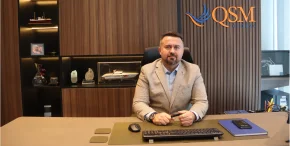
Girne ve Silivri’de yaşanan iki farklı deniz kazası, denizcilikte seyir güvenliği, köprüüstü yönetimi, insan faktörü ve karar alma süreçlerinin önemini bir kez daha gündeme taşıdı. Kazaların ardından ortaya çıkan değerlendirmeler, yalnızca son anda verilen kararların değil; personel yeterliliği, vardiya düzeni, iletişim, işletme politikaları ve sistemsel eksikliklerin de birlikte ele alınması gerektiğini gösteriyor. Bu kapsamda, KTÜ DUİM Mezunları Derneği Yönetim Kurulu Başkanı ve QSM Global Kurucu Ortağı Kaptan Orhan Kasap ile iki kazanın oluşum süreçlerini, kaptan ve işletme sorumluluklarını, köprüüstü organizasyonunu ve denizcilik sektörünün bu olaylardan çıkarması gereken dersleri konuştuk.
Yazar: Eda GEDİKOĞLU
14 Eki 2026