

Strategic Solutions from Turkish P&I Insurance for the Maritime Sector, from Claims Management to Risk Prevention
Yazar: Eda GEDİKOĞLU
22 Eki 2025
Turkish P&I Insurance, one of the pioneers of P&I insurance in Turkey, has become a major force in both the national and international maritime markets. With its strong reinsurance structure, extensive international network of representatives, and innovative products, Turkish P&I Insurance quickly gained attention and now provides services in 17 different countries. Turkish P&I Insurance General Manager Ufuk Teker, with whom we discussed Turkish P&I Insurance's vision, future goals, and solutions for the maritime sector, explained the details of the “Turkish P&I Version 2.0” vision, sustainability policies, and damage management and risk prevention strategies.
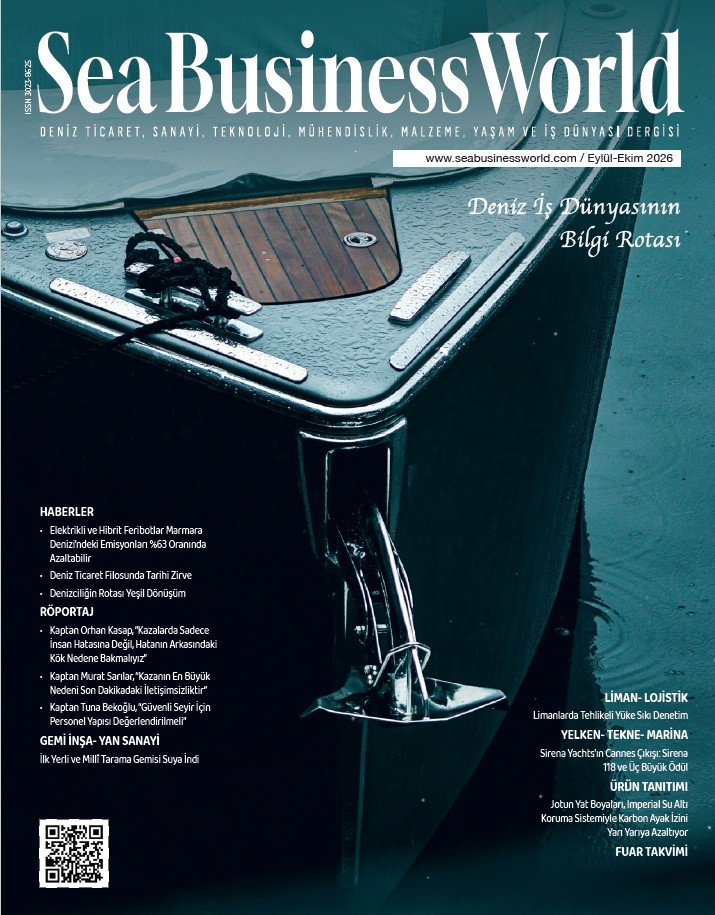
Turkish P&I Insurance, one of the pioneers of P&I insurance in Turkey, has become a major force in both the national and international maritime markets. With its strong reinsurance structure, extensive international network of representatives, and innovative products, Turkish P&I Insurance quickly gained attention and now provides services in 17 different countries. Turkish P&I Insurance General Manager Ufuk Teker, with whom we discussed Turkish P&I Insurance's vision, future goals, and solutions for the maritime sector, explained the details of the “Turkish P&I Version 2.0” vision, sustainability policies, and damage management and risk prevention strategies.
Turkish P&I Insurance was established in 2013, becoming the first and only company operating in the P&I insurance sector in Turkey. With its strong reinsurance structure, international representative network, and the extensive customer portfolio it has built in a short time, it has achieved a significant position in the industry. We would like to begin our interview by discussing the founding story of Turkish P&I. Could you briefly describe its development from its inception to the present day, the differences it has created in the national and international markets, and its vision and mission?
Turkish P&I Insurance was established on December 31, 2013, the last day of the year. In fact, long before that, there had been demands from the industry for the establishment of a Turkish P&I insurance company that could provide liability coverage for shipowners in Turkey. Around the world, such insurance companies are generally established as shipowners' clubs, structures that provide high coverage and long-term guarantees to meet the liabilities of shipowners. These insurers, mainly based in Western Europe and the UK, were known by their countries' names. For example, clubs such as the UK P&I Club, West of England, North of England, Standard Club, and Swedish Club stood out as institutions that brought great prestige to their countries' maritime industries.
After this idea came to the fore in Turkey, the greatest support for the establishment process came from the then Minister of Transport, Mr. Binali Yıldırım. He motivated us, encouraged us, and paved the way for us. Subsequently, three P&I club representatives operating in Turkey at the time, Omur Marin, Metropol, and Bitsan, were brought together with three state-owned insurance companies, Halk Sigorta, Güneş Sigorta, and Ziraat Sigorta.
So why did the state need such motivation? Because Turkey is located in a region surrounded by embargoes. For example, Iran had a fleet of around 15-16 million DWT after being subject to American embargoes, if I remember correctly. However, during the embargo process, in addition to financial restrictions, its ships were also confined to ports due to the insurance embargo. This is because every ship over 300 gross tons must have appropriate liability insurance coverage. Since Iran could not establish its own insurer and was subject to international embargoes, its fleet became immobilized. This led to significant losses, both commercially and economically. This example clearly demonstrated how strategic such insurance is for Turkey. Following the decision to establish the company, operations began rapidly. The primary need was to create a very strong and conservative reinsurance structure. To this end, intensive travel was undertaken, discussions were held with international reinsurers, and agreements were secured. Subsequently, following evaluations by the Council of Ministers, the company was named Turkish P&I. Just like North of England, UK Club, The American Club, Japan P&I Club, and Korea P&I Club, Turkey now had its own P&I insurer. Today, we offer our products not only to Turkish seafarers but also in 17 different countries.
"At Türk P&I, we are always looking ahead and focusing on foreign markets."
Türk P&I Sigorta offers customized services and solutions tailored to the needs of the maritime industry. Could you share with us the scope of the products and services you develop for your policyholders, the advantages your solutions offer the sector, and your differentiation strategy in this area?
Every country has fleets operating in the near seas and making international voyages. The maritime sector in Turkey has gained significant momentum and continued to develop, particularly in the last 25-30 years. Today, Turkish maritime activity is not limited to shipownership; it has also shown significant growth in ship management, seafaring personnel, maritime training, shipbuilding, and even fishing. Our fishing activities have expanded beyond our borders, with Turkish fishermen now fishing in West Africa, Mauritania, the Far East, and the Arabian Gulf.
As our maritime sector began to develop, it occasionally faced difficulties in meeting the standards that Western insurers expected of Turkish seafarers.
At Turkish P&I, we established standards appropriate to Turkey's local conditions, generated statistics, and measured the frequency of recurring losses. By seeking answers to the question, "What types of losses are Turkish shipowners most frequently exposed to?", we developed appropriate products and began serving Turkish shipowners. We are always forward-looking and focused on foreign markets. Our goal is to be an active insurer not only on a national scale but also in distant geographies.
"We based our environmental policy on the ESG criteria set by the United Nations."
At TÜRK P & I, you place the philosophy of sustainable development at the core of all your business processes. Within this framework, how do you define your sustainability and quality approach? How do you assess the contributions of this approach to both your corporate culture and the development of the insurance sector?
One of the concepts I've embraced most recently is "sustainability." Its English equivalents, "sustainability" and "continuation," have become the most common terms we hear when speaking to foreigners. Today, these concepts are prominent not only in maritime or insurance, but across all sectors. A sustainable economy, sustainable profitability, and environmental sensitivity must be taken into consideration by individuals, companies, and countries alike.
For us, establishing a robust structure that will sustain our company for many years is as crucial as our environmental responsibility and sensitivity. To this end, we've based our environmental policy on the ESG (Environmental, Social, Governance) criteria established by the United Nations. ESG offers guiding principles across a wide range of topics, from clean water and gender equality to good governance and the fight against racism, environmental sensitivities and social responsibility. As Türk P&I, we've built our structure on these principles.
"In the near future, it will be impossible for a shipping company that isn't environmentally conscious to find insurance."
Starting this year, we began regular reporting on sustainability. First, we identified our current situation: How much energy do we consume, how environmentally conscious are we, what is our female employment rate, and how strong is our stance against racism? We measured all of these factors. From now on, we will quantify this data, report it to the public annually, and share it transparently.
Environmental issues are also of great importance to insurers. The sector's responsibilities are increasing, especially in the maritime sector, in line with the "zero emissions" target set for 2050. This is because many issues, from embargo control to environmental regulations, are now handled through insurers and financial institutions. In the near future, it will be impossible for a shipping company that isn't environmentally conscious to find insurance. Insurers will require shipowners to measure and report their environmental vulnerabilities and provide coverage accordingly.
Various international initiatives are being developed in this area. As Türk P&I, we are closely monitoring the developments. Both reporting to the IMO and the "Poseidon Principles" developed among insurers are extremely important to us. The environment and sustainability are among our top priorities.
"Our team consists of valuable professionals with maritime training and expertise in maritime law."
The types and frequency of maritime accidents directly impact P&I insurance's risk management strategies. What are the most common accident types and damage scenarios among Turkish P&I members in recent years? How is this accident data reflected in risk classification and policy design processes?
In fact, at the core of our product lies damage management. We have a very large and experienced claims team, comprised of valued professionals with maritime training and expertise in maritime law. Damage management is a vital element for insurance companies. As an insurance company, we measure shipboard risk based on both actual damage and potential incidents. The "Swiss Cheese Theory" is a key concept here. For a damage to occur, many vulnerabilities must coexist, like holes in a cheese. Based on this theory, we analyze both the frequency of damage and the likelihood of recurrence, and inform our shipowners to prevent the same damage from recurring. We strive to manage this process by publishing various announcements, circulars, and articles.
So, what types of damages are most prominent? At this point, we need to consider the global scale. Last year, I attended a meeting of the World Association of Marine Underwriters, and according to the data shared there, fires on container ships and Ro-Ro vessels accounted for the largest global losses. These extremely high-impact damages resulted in losses of hundreds of millions of dollars. Machinery damage ranked second; malfunctions in technical equipment and machinery on ships resulted in significant costs. Cargo damage and passenger-related damage came third. Furthermore, deaths and injuries to ship crew are also a very important and sensitive issue for insurers. We are working diligently to reduce these types of damages, which unfortunately occur at a very high frequency. The sea is inherently a very challenging working environment. Approximately 80% of maritime losses today are caused by personnel. Consequently, the mental health of personnel has recently become much more important than occupational safety. For general insurers in particular, the focus is not only on employees' physical health but also on their mental and psychological well-being. This is because ship crews work in confined spaces, isolated from their families, for long periods. In the past, these conditions, often lacking internet or telephone access, created significant psychological challenges. Therefore, insurers and employers are now focusing more closely on their employees, providing them with not only occupational safety but also psychological support.
"A ship insured by Türk P&I can find a representative wherever it is in the world."
Efficient and swift compensation processes increase shipowner confidence and minimize operational disruptions. What procedures does Türk P&I use to manage the damage assessment, appraisal, and payment phases of post-accident damage compensation? How is the process conducted in complex or multi-party accidents?
No two incidents in maritime are exactly alike; each involves different dynamics. The ships we insure at Türk P&I currently sail worldwide, from the Far East to Scandinavia, from Russia to the United Arab Emirates. Naturally, many different incidents can occur in this vast geography, and shipowners, shipowners, and crews need us in these situations. Being able to quickly respond to incidents at the scene of an accident is an integral part of our job. This not only ensures effective process management but also keeps costs under control. Every minute is crucial in maritime, ensuring ships continue sailing without delay.
That's why we operate with over 370 local representatives in 145 countries. We have a wide network spanning from China to Japan, Nigeria to Singapore. At Türk P&I, a ship insured knows it can find a representative wherever it is in the world. We are local everywhere. We work with licensed and certified experts for incidents in Turkey, while we assign specialized experts to ships abroad.
'As Turkish P&I, we approach the ship from a risk perspective, develop preventive activities to prevent potential risks, and direct our experts to the ships.'
Reducing accident risks reduces insurance costs and increases safety. What inspection programs, technical safety consulting, or training does Türk P&I implement to help its members prevent accidents? Are there special measures specifically for high-risk ship types?
Our company currently has a dedicated Damage Prevention Department. The team members working in this department are experts with extensive technical knowledge. Of course, flag states and port states conduct regular ship inspections. However, at Türk P&I, we approach ships from a risk perspective, develop preventative measures to mitigate potential risks, and deploy our experts on ships.
As part of these efforts, we identify risks that could threaten the environment, the country, or personnel safety and implement measures to address them. We call these inspections, which we conduct before coverage, "pre-entry condition surveys." This means we examine the ship's condition before insurance coverage begins and, if deemed appropriate, secure coverage. If there are any deficiencies, we request the shipowner to address them.
This process is an integral and crucial part of our work. Furthermore, when similar deficiencies or risks are identified, we communicate these through circulars not only to the relevant vessel but to all shipowners. Thus, we contribute to preventing similar risks across the industry.
'We see digitalization as an integral part of sustainability and integrate it into all our systems'
Autonomous ships, LNG/LPG, and hybrid propulsion systems create new risk profiles. How does Türk P&I assess the accident and liability risks associated with these new-generation ship technologies? What insurance strategies are you planning for the future of increasing environmental and technological risks?
Technological risks are among the primary risks that will increase in the future. In this context, plans are being made for "high risk order" strategies. Artificial intelligence, in particular, has permeated every aspect of life today. At Türk P&I, we see digitalization as an integral part of sustainability and are integrating it into all our systems. Currently, our company has a digital reporting system that provides real-time visibility into all its operations. We collect our data in a central database and generate approximately 100 reports per day, providing a clear picture of the company's current status.
We recently developed a new digital reporting system for our damage prevention activities. This system allows all deficiencies identified during ship surveys to be measured parametrically. Our experts deployed to the ship can connect to the system online and instantly upload any deficiencies. This allows us to measure and statistically analyze which types of deficiencies are recurring on which ships.
We've entered the final quarter of 2025. How was 2025 for Turkish P&I? What are your expectations, goals, and plans for the coming period?
Recently, we've been making serious preparations for the company's second version. We've named our work Turkish P&I Version 2.0. Within this scope, we're planning innovations in many areas, from our reinsurance structure to personnel training. The personnel training I mentioned here encompasses not only internal training but also international training. We also aim to reshape our reinsurance structure, making it even more beneficial.
We've moved our office to the Istanbul Financial Center. The Istanbul Financial Center offers us many advantages. It offers a unique opportunity for companies exporting financial services and operates entirely within a free zone framework. Consolidation among international P&I insurers is likely in the coming period. We're closely monitoring the market and are in discussions with foreign insurers. We may establish various collaborations with similar companies, forming joint groups and alliances in the future.
A very active period awaits us. We are currently closing the year with approximately $75 million in premium production. Our initial goal is to reach $100 million and progress towards becoming a globally respected insurer.
Any final words?
Corporate nationalism is very important to us. Turkish P&I is one of the organizations supporting the Turkish maritime industry. It's important to remember that a prestigious fleet absolutely must have appropriate insurance coverage. We strive to provide this coverage in the strongest possible way.
Turkish P&I Insurance, Maritime Sector, Ufuk Teker
Bültene Kaydol
Gelişmelerden haberdar ol
İlgili İçerikler
“Uluslararası Standartlara Uygun, Güvenli ve Sürdürülebilir Taşımacılık Anlayışıyla Faaliyet Gösteriyoruz”
5. Türkiye Denizcilik Zirvesi kapsamında, ACECHEM TANKER Uzak Yol İkinci Gemi Kaptanı Ozan Gerçek ile bir araya geldik. Türk denizciliğinin son yıllardaki gelişimini, Kabotaj Kanunu'nun 100. yılının sektöre kazandırdığı farkındalığı ve denizcilik organizasyonlarının sektörün geleceğine sağladığı katkıları değerlendiren Gerçek, Türk denizciliğinin uluslararası alandaki konumunun her geçen gün güçlendiğini vurguladı.
Yazar: Eda GEDİKOĞLU
14 Ağu 2026
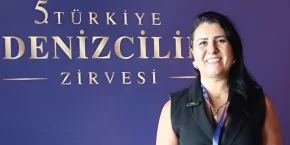
“Türk Denizciliğinin Geleceği İçin Güçlü Milli Filo ve Güçlü Kadın Denizciler”
5. Türkiye Denizcilik Zirvesi kapsamında Türk denizciliğinin öncü isimlerinden biri olan Türkiye Denizcilik İşletmeleri Deniz Yolları İşletmesi İlk ve Tek Kadın Kaptanı ve Kadın Gemi Kaptanları, Mühendisleri ve Denizciler Derneği Kurucu Başkanı Sedef Esra Ulutürk Dinç ile bir araya geldik. Türk bayraklı yolcu gemilerinde görev yapan ilk Türk kadın kaptan olan Dinç, Kabotaj Kanunu'nun 100. yılının taşıdığı stratejik önemi, kadın denizcilerin sektördeki yükselen rolünü ve Türkiye denizciliğinin geleceğine ilişkin değerlendirmelerini anlattı.
Yazar: Eda GEDİKOĞLU
14 Ağu 2026

“Denizciliğin Geleceği Güçlü İnsan Kaynağıyla Şekillenecek”
Türkiye Denizcilik Zirvesi kapsamında QSM Global Kurucusu ve Karadeniz Teknik Üniversitesi Mezunlar Derneği Yönetim Kurulu Başkanı Orhan Kasap ile bir araya geldik. Zirvenin sektöre sağladığı katkıları, Kabotaj Kanunu'nun 100. yılının taşıdığı stratejik önemi ve Türk denizciliğinin geleceğine ilişkin değerlendirmelerini paylaşan Kasap, özellikle gemi insanı yetiştirilmesi ve nitelikli insan kaynağının güçlendirilmesinin sektörün sürdürülebilir büyümesinde kritik rol oynadığını vurguladı.
Yazar: Eda GEDİKOĞLU
14 Ağu 2026