

“The Turkish Ship and Yacht Industry is Increasing Its Power in Global Competition with Green Transformation and Value-Added Production.”
Yazar: Eda GEDİKOĞLU
21 Eki 2025
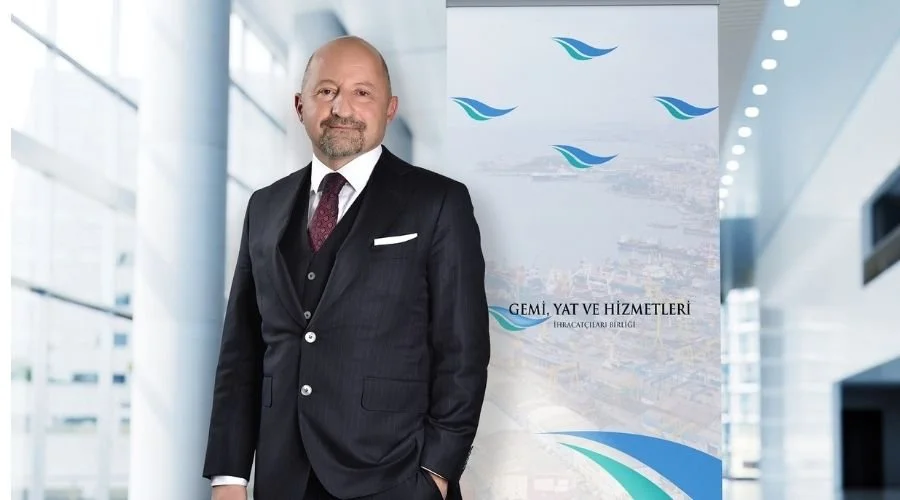
Turkey has become a strong global player thanks to its success in ship and yacht exports in recent years. The sector, notable for its global leadership in fishing vessels, its rise to second place in mega yacht production, and its ranking among the top five countries in tugboat exports, is poised to reach an export volume exceeding $1.9 billion in 2024. Cem Seven, Chairman of the Board of the Ship and Yacht Exporters' Association (GYHİB), said, "Turkey is strengthening its leadership position in global niche segments with its flexible and fast production, design and engineering strengths, and its openness to green transformation. As GYHİB, we will continue to support our members in marketing and promotion, design and innovation, regulatory compliance, and market research."
Turkey has become a strong global player thanks to its success in ship and yacht exports in recent years. The sector, notable for its global leadership in fishing vessels, its rise to second place in mega yacht production, and its ranking among the top five countries in tugboat exports, is poised to reach an export volume exceeding $1.9 billion in 2024. Cem Seven, Chairman of the Board of the Ship and Yacht Exporters' Association (GYHİB), said, "Turkey is strengthening its leadership position in global niche segments with its flexible and fast production, design and engineering strengths, and its openness to green transformation. As GYHİB, we will continue to support our members in marketing and promotion, design and innovation, regulatory compliance, and market research."
The Ship and Yacht Exporters' Association, one of Türkiye's most important representation mechanisms in ship and yacht exports, plays a significant role in increasing the sector's visibility on a global scale. What kind of efforts are you undertaking as an association to enhance the competitiveness of your members in international markets?
· National participation and country pavilions: We participate in strategic fairs such as Nor-Shipping, Posidonia, SMM, Europort, Monaco Yacht Show, and Cannes Yachting Festival, both through national participation organizations and info stands. We offer collaboration and B2B meeting opportunities for our participating companies, and we organize target country delegations.
· Design and talent development: Since 2010, we have been supporting student-industry interaction through the National Ship and Yacht Design Competitions; each competition is organized with a different theme.
· Promotion: We strengthen global awareness through sectoral promotional projects like "Art on Water" and ensure continuous visibility through our corporate communication channels.
· Effectively utilizing government support: We inform our member companies about government support, review their applications, and ensure they benefit from it. In addition to general support, we also provide support such as ship and yacht design support and market entry support for class certificates. · Market research and reporting: We share company and product breakdowns, unit price trends and target market signals with monthly/content-based export reports.
In recent years, Turkey has become a major production center for ship and yacht exports, serving a wide geography from Europe to the Middle East, America to Asia. How do you assess the competitiveness of Turkish ship and yacht exports in the global market? What would you say if we asked you to assess the roadmap of Turkish manufacturers in terms of value-added production, high-tech shipbuilding, and design capabilities?
Turkey stands out with its high-value-added niche vessels, such as tugboats, fishing vessels, special-purpose platforms, and yachts over 24 meters, its rapid delivery and customization capabilities, design-engineering integration, and competitive cost/quality balance. Unit price analyses showed that in 2024, we reached levels of $30 and above per kg for new-build custom vessels and yacht-tugboat subgroups, a significant indicator of added value.
• Electrification/hybrid and alternative fuel integrations,
• Shipyard digitalization and autonomy modules,
• Expanding refit and retrofit capacity (especially yacht and environmental retrofits).
Turkey's top ranking in the superyacht order book is a global affirmation of our design and craftsmanship strengths.
• Furthermore, our shipyards and service providers have significant strength and recognition compared to their competitors, particularly in after-sales service.
“Our total ship and yacht exports in 2024 were realized as 1.912 billion USD.”
While Turkey continues to be one of Europe's largest players in yacht production, it is also making a name for itself in the global competition of commercial and special-purpose vessels. What is Turkey's current position in global ship and yacht exports? What are its competitive advantages and areas for improvement? What are Turkey's current top export regions and countries? Could you also discuss the most exported product groups?
Today, Turkey has been the world's leading exporter of fishing vessels for many years. According to Boat International's 2025 Global Order Book, Turkey has risen to second place in the world in mega yacht production, and we have long been among the top five countries in tugboat exports. These achievements are particularly reflected in the figures across product groups.
In 2024, our total ship and yacht exports reached $1.912 billion. Among the largest product groups, Cargo Ships and Other Vessels ranked first with $481.5 million, while Yachts reached an export volume of $442.4 million, reaching an all-time high. Fishing Vessels exported $354.5 million, and Tugboats exported $280.8 million.
Our main export markets included Norway, the Marshall Islands, Italy, Greece, Malta, Canada, Germany, the United Arab Emirates, and Oman. It's worth noting that these figures include: It does not include boats manufactured in our country and exported through free zones, as well as repair, maintenance, and other services provided by our shipyards. Norway, as it has long been, remains the largest export country in shipbuilding. Other Northern European countries can also be considered as similar markets. The US and Middle Eastern countries are among our yacht export markets. However, in the yacht product group, customers above a certain income level contribute to our exports, rather than geographical targets. Currently, many world-renowned and well-known brands are manufacturing their boats in Turkey and placing orders for them.
“Sustainable material use, digitalization and autonomous technologies are at the forefront.”
In global competition, advanced engineering solutions, digitalization, and innovation have become key drivers in the ship and yacht industry. What projects do the association members highlight in R&D, digitalization, and sustainable material use? What is Turkey's position compared to its international competitors in smart manufacturing technologies, automation, and shipyard modernization?
In Turkey, leading fleets and product lines are developing in green energy and automation, particularly in the tugboat class, with battery/hybrid, LNG, and methanol solutions. Digitalization is being adopted in line with global trends in both shipyard processes and manufactured products. Sustainable materials are gaining prominence in the sector. Low-VOC paints, advanced composites, increased recyclable material ratios, and energy-efficient equipment.
Compared to our European competitors, the sector's capital utilization and R&D efficiency in niche areas are quite high, and the modernization process is accelerating thanks to public support and clustering. However, unfortunately, we are significantly behind our competitors in terms of the government support our sector receives to implement these transformations. In this regard, support mechanisms specifically tailored to the sector's needs and dynamics must be adapted and implemented.
"As the Ship, Yacht and Services Exporters' Association, we are promoting Turkey's green and innovative ship and yacht construction competence in global markets."
The IMO's emissions restrictions and the EU's Green Deal processes have made environmentally friendly solutions in ship and yacht production no longer a choice, but a necessity. What technologies and certification processes do Turkish ship and yacht manufacturers use to comply with environmental regulations? As the Ship and Yacht Exporters' Association, what kind of work are you doing to comply with these processes? What are your thoughts on alternative fuel systems, hybrid, and electric propulsion solutions, particularly in the yacht sector?
IMO emissions regulations and EU Green Deal legislation aim to reduce greenhouse gas (GHG) and air pollutant emissions (NOx, SOx, PM). Each type of emission has its own requirements and compliance strategies.
NOx (Nitrogen oxides): According to MARPOL Annex VI, global Tier II limits for NOx apply; within the IMO-declared NECA (NOx Emission Control Areas), Tier III engines are mandatory. Our shipyards integrate Tier III-compliant main engines and related equipment into vessels operating under NECA, ensuring complete documentation and classification processes.
SOx (Sulfur Oxides): Compliance with SECAs for SOx is achieved through the use of low-sulfur fuel or exhaust gas treatment systems (scrubber/EGCS). Our newbuilding and maintenance-repair shipyards in Turkey have installed scrubbers on hundreds of vessels, making them a key hub for such modifications in our region.
Greenhouse gases and energy efficiency: The IMO's EEDI (newbuilding ≥400 GT), EEXI (existing ships), and CII (operational carbon intensity) requirements, as well as the EU's ETS and FuelEU Maritime regulations, mandate energy efficiency in design and operations. EEDI criteria are met in new ships ≥400 GT built in Turkey; our shipyards implement solutions such as hull form optimization, propeller selection, propulsion efficiency-enhancing nozzles/fins, and other ESDs. On the operational side, the performance required by CII and ETS is supported by improvements such as wind-assisted propulsion, high-efficiency propellers, and optimized underwater form. The construction and delivery of NEOLINER ORIGIN, one of the world's first newbuild wind-assisted Ro-Ro vessels, at RMK Marine, is a concrete example of our competence in this area.
Alternative fuels and safety: While IMO fuel greenhouse gas intensity targets and the EU FuelEU Maritime are paving the way for alternative fuels such as methanol, ammonia, and hydrogen, implementation is progressing gradually due to global availability and safety requirements. Biofuels and LNG are being adopted as interim solutions, while renewable energy sources such as wind and shore power are being introduced. Risks such as low ignition temperatures and toxicity require additional design/insulation measures within the framework of the IGF Code. Our shipyards can routinely build methanol-powered or methanol-ready vessels and successfully manage the relevant class/certification processes.
Yacht industry – electric/hybrid solutions: While alternative fuels are gaining popularity in yachts at a slower pace, interest in fully electric and hybrid propulsion systems is rapidly growing. Charging batteries at specific times and using electric motors to ensure quiet and comfortable sailing is a key driver for yacht owners. While battery weight remains the primary technical constraint, applications are expected to expand with increases in energy density and capacity.
Turkey's contribution and the role of GYHİB: In recent years, a significant portion of Turkey's newbuilding portfolio has consisted of highly energy-efficient, alternatively fueled, or electric/battery-powered projects; a significant portion of the sector's production (60–80%) is exported. As the Ship, Yacht and Services Exporters' Association, we organize national pavilions at international fairs to highlight this transformation and promote Turkey's green and innovative ship and yacht building capabilities in global markets through film, photography, and digital publishing projects such as "Art on Water."
“We want to increase our effectiveness for many of our product groups in the Gulf and Middle East countries.”
In recent years, the Middle East, Africa, and Asia, along with European and American markets, have become increasingly important target markets for Turkish ship and yacht manufacturers. Which regions stand out as strategic growth areas for Turkey in ship and yacht exports in the coming period? As the Ship and Yacht Exporters Association, what regions do you envision as new market targets for Turkey?
European countries, particularly Northern Europe, maintain their place as a market. Canada is a market we have targets for and is on our radar, both through trade delegations and digital promotional projects. We want to increase our presence in the Gulf and Middle Eastern countries for many of our product groups. Fishing fleet renewals and ferry needs in Africa also present opportunities for our sector. Furthermore, green transformation projects will create new market opportunities for our sector in many parts of the world.
How was 2025 for the Ship and Yacht Exporters Association? What are your expectations, goals, and predictions for 2026? As of the first three quarters of 2025, our exports exceeded $1.4 billion, and we are nearly 10% ahead of the previous year. We anticipate exceeding our projected and targeted figures for the end of the year. The significant increase in our yacht exports is a major factor in this. It's too early to make predictions for 2026, but our industry is facing a year marked by significant uncertainty and difficulty in securing new orders. It would be more accurate to interpret these figures after observing year-end export figures and the order status of existing shipyards.
"Our goal for 2026 is to further strengthen the Turkish brand by increasing the share of high-value-added products and green-certified deliveries."
What would you like to add as a final note?
Turkey is asserting its leadership in global niche segments with its flexible and rapid production, design and engineering strengths, and openness to green transformation. As GYHİB, we: We will continue to support our members in marketing and promotion, design and innovation, regulatory compliance, and market research. Our goal for 2026 is to further strengthen the Turkish brand by increasing the share of high-value-added products and green-certified deliveries. The sector now has pressing issues that we have addressed and expressed on numerous platforms. The steps and approaches taken to address these challenges will determine the magnitude of our success.
Green Transformation, Cem Seven
Bültene Kaydol
Gelişmelerden haberdar ol
İlgili İçerikler
“Uluslararası Standartlara Uygun, Güvenli ve Sürdürülebilir Taşımacılık Anlayışıyla Faaliyet Gösteriyoruz”
5. Türkiye Denizcilik Zirvesi kapsamında, ACECHEM TANKER Uzak Yol İkinci Gemi Kaptanı Ozan Gerçek ile bir araya geldik. Türk denizciliğinin son yıllardaki gelişimini, Kabotaj Kanunu'nun 100. yılının sektöre kazandırdığı farkındalığı ve denizcilik organizasyonlarının sektörün geleceğine sağladığı katkıları değerlendiren Gerçek, Türk denizciliğinin uluslararası alandaki konumunun her geçen gün güçlendiğini vurguladı.
Yazar: Eda GEDİKOĞLU
14 Ağu 2026
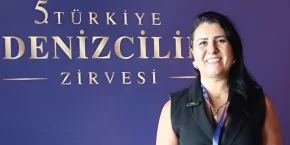
“Türk Denizciliğinin Geleceği İçin Güçlü Milli Filo ve Güçlü Kadın Denizciler”
5. Türkiye Denizcilik Zirvesi kapsamında Türk denizciliğinin öncü isimlerinden biri olan Türkiye Denizcilik İşletmeleri Deniz Yolları İşletmesi İlk ve Tek Kadın Kaptanı ve Kadın Gemi Kaptanları, Mühendisleri ve Denizciler Derneği Kurucu Başkanı Sedef Esra Ulutürk Dinç ile bir araya geldik. Türk bayraklı yolcu gemilerinde görev yapan ilk Türk kadın kaptan olan Dinç, Kabotaj Kanunu'nun 100. yılının taşıdığı stratejik önemi, kadın denizcilerin sektördeki yükselen rolünü ve Türkiye denizciliğinin geleceğine ilişkin değerlendirmelerini anlattı.
Yazar: Eda GEDİKOĞLU
14 Ağu 2026

“Denizciliğin Geleceği Güçlü İnsan Kaynağıyla Şekillenecek”
Türkiye Denizcilik Zirvesi kapsamında QSM Global Kurucusu ve Karadeniz Teknik Üniversitesi Mezunlar Derneği Yönetim Kurulu Başkanı Orhan Kasap ile bir araya geldik. Zirvenin sektöre sağladığı katkıları, Kabotaj Kanunu'nun 100. yılının taşıdığı stratejik önemi ve Türk denizciliğinin geleceğine ilişkin değerlendirmelerini paylaşan Kasap, özellikle gemi insanı yetiştirilmesi ve nitelikli insan kaynağının güçlendirilmesinin sektörün sürdürülebilir büyümesinde kritik rol oynadığını vurguladı.
Yazar: Eda GEDİKOĞLU
14 Ağu 2026